You’ve just moved into an older home, or maybe your lights flicker every time you plug in a blender. The thought of ripping open walls and paying an electrician feels overwhelming. You need a clear, honest answer to the electrician cost to rewire a 3 bedroom house — not a generic estimate that leaves you confused. This guide covers real market prices for 2026, what drives the final bill, and how to avoid expensive surprises. By the end, you’ll know exactly what to ask for and what to budget, so you can make a confident decision without losing sleep over hidden costs.
Rewiring a three‑bedroom home is a major investment. Prices vary wildly depending on your location, home age, and whether you include smart upgrades or panel replacements. The national average for a full rewire of a three‑bedroom house runs between $6,000 and $15,000, with most homeowners paying around $9,500. That range can drop or climb based on factors like accessibility, local permit fees, and the type of wiring you choose. We’ll break down every cost component so you can compare quotes like a pro.
What Affects the Electrician Cost to Rewire a 3 Bedroom House?

Before diving into numbers, it helps to understand what goes into the final quote. Electricians don’t just charge for wire and labor. The following factors play a big role in the total cost.
Home Age and Existing Wiring
Homes built before 1970 often have outdated wiring like knob‑and‑tube or aluminum wire. Replacing these requires extra care, fire hazard mitigation, and sometimes additional parts. Read also: How Much to Replace Old Knob and Tube Wiring: 2026 Cost Guide. If your panel is also outdated, you’ll likely need an upgrade at the same time.
Scope of Work
A “full rewire” means every wire from the meter to every outlet is replaced. A partial rewire only addresses certain rooms or circuits. Naturally, the full job costs more but is safer and more future‑proof.
Accessibility
Homes with crawl spaces, unfinished basements, or attics make it easy to run new wires without cutting drywall. Multi‑story homes or houses with finished basements mean more drywall repair work, adding up to $2,000–$4,000 for patching and painting.
Local Labor Rates and Permits
Electrician rates vary from $50 to $150 per hour depending on your region. Permits cost anywhere from $100 to $500. Always get a quote that includes permit fees and final inspection.
Materials and Upgrades
Standard copper wire (Romex) is the most common. Upgrading to armored cable, adding dedicated circuits for heavy appliances, or integrating smart home features will increase material costs. Read also: Cost to Upgrade Electrical Panel to 200 Amps: Full Guide 2026.
Average Cost Breakdown for Rewiring a 3‑Bedroom House
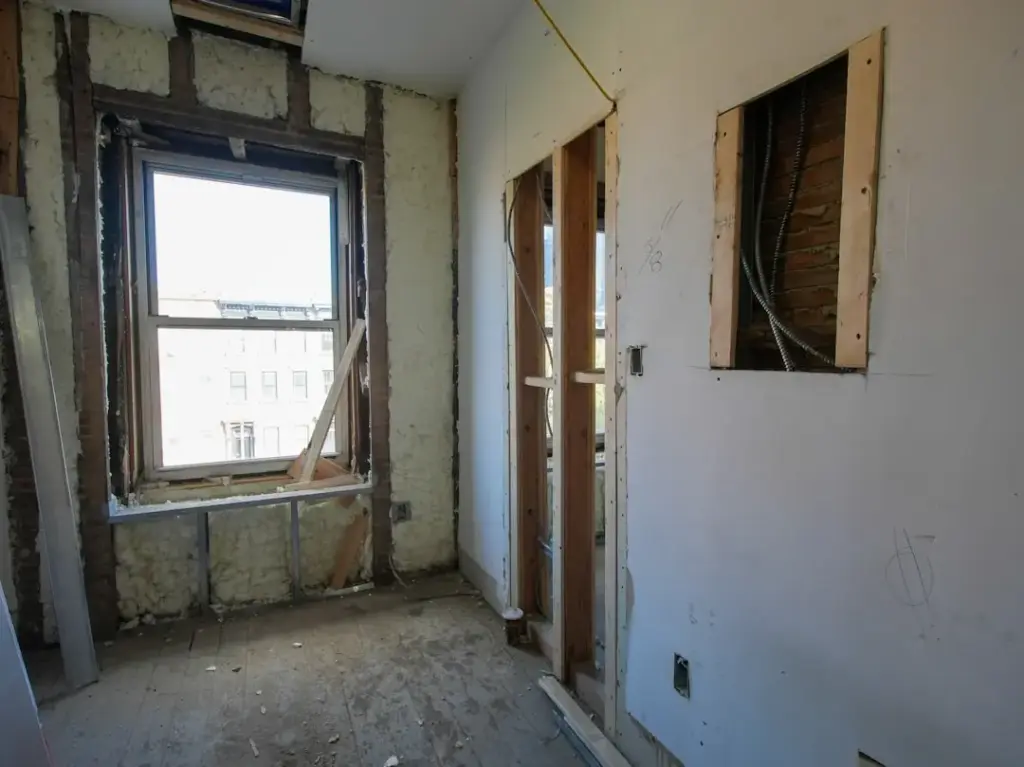
Here is a typical cost breakdown for a full rewire of a 1,500‑square‑foot three‑bedroom home using modern copper wiring. Prices are national averages for 2026.
| Cost Item | Estimated Range | Notes |
|---|---|---|
| Labor (electrician) | $3,000 – $7,500 | Depends on hourly rate and total hours (40–80 hours typical) |
| Materials (wire, boxes, breakers) | $1,200 – $2,500 | Includes 12/2 and 14/2 Romex, outlets, switches, covers |
| Electrical panel upgrade (if needed) | $1,500 – $3,200 | Often required for modern loads; 200A panel recommended |
| Drywall repair & repainting | $1,000 – $4,000 | Can be done by electrician or hired separately |
| Permits & inspection fees | $150 – $500 | Varies by city; mandatory for safety compliance |
| Miscellaneous (travel, disposal) | $200 – $600 | Hauling old wiring, temporary power rental |
| Total Full Rewire | $6,000 – $15,000 | Typical mid‑range around $9,500 |
Types of Rewiring Projects: A Comparison Table
Not every house needs a full gut. Below we compare the most common rewiring scenarios for a three‑bedroom home. Use this to decide which fits your situation.
| Rewire Type | Average Cost (3‑bed) | Time Estimate | Best For | Key Considerations |
|---|---|---|---|---|
| Full Rewire (all new wiring) | $7,000 – $15,000 | 3–7 days | Older homes with knob‑and‑tube or unsafe wiring | Requires drywall repair; most thorough option |
| Partial Rewire (specific rooms) | $2,000 – $5,000 | 1–3 days | Targeting one floor or a few problem circuits | Not a complete safety solution; future issues may appear |
| Rewire + Panel Upgrade (200A) | $8,000 – $16,000 | 4–8 days | High‑load homes with electric vehicles or electric heat | Adds significant value; required for many smart devices |
| Rewire with Smart Home Prep | $9,000 – $18,000 | 5–10 days | Homeowners planning to integrate smart lighting, sensors, etc. | Extra cost for neutral wires, conduit, and dedicated circuits |
The 5 Best Rewiring Approaches for a 3‑Bedroom House (Numbered List)
We’ve ranked the most practical rewiring options based on safety, cost efficiency, and future‑proofing. Each option is evaluated with real‑world factors like ease of installation, hidden costs, and user feedback from homeowners who’ve done the job.
1. Best Overall: Full Rewire with Copper Wiring and 200A Panel
Overview
This is the gold standard: replace every inch of old wire with modern copper NM‑B cable, upgrade the service panel to 200 amps, and add GFCI/AFCI protection where required. It’s the most expensive upfront but eliminates fire risks and supports all modern electronics.
Features
- All new wiring from meter to each outlet and switch
- 200A panel with arc‑fault breakers for bedrooms
- Ground wires brought to every box (safety)
- Optional: dedicated circuits for kitchen, laundry, and HVAC
Pricing
$8,000 – $16,000 depending on local rates and drywall work. Expect about $9,500 for the rewire alone, plus $1,500–$3,200 for the panel upgrade.
Advantages
- Maximum safety and code compliance
- Supports 50+ amps for future electric vehicle charging
- Adds home resale value
Disadvantages
- Highest initial cost
- Requires extensive drywall repair
- Can take a week or more
Best For
Homeowners planning to stay 5+ years or anyone with knob‑and‑tube wiring. Also best for those adding large appliances.
User Experience
Most homeowners report peace of mind after the job, especially those in older homes. Complaints center on the mess and living without power in parts of the house for several days. Many recommend hiring a separate drywall crew to speed things up.
Expert Opinion
From a safety and value standpoint, this is the most recommended approach for any home built before 1980. The slight extra cost over a partial rewire is worth it to avoid future failures. Combine it with a panel upgrade to meet modern electrical demands.
2. Best Value: Partial Rewire with Panel Upgrade (Focus on Problem Areas)
Overview
If your wiring is mostly intact but your panel is outdated or you have a few dangerous circuits, a targeted partial rewire plus a 200A panel upgrade offers a strong safety improvement without the full‑house price.
Features
- Upgrade panel to 200A (or 150A minimum)
- Replace wiring only in the kitchen, bathrooms, and exterior
- Add GFCI outlets where missing
- Leave existing wiring in bedrooms if it tests safe
Pricing
$3,500 – $7,000. Panel upgrade costs $1,500–$3,200; partial rewiring $2,000–$4,000.
Advantages
- Lower upfront cost
- Addresses high‑risk areas first
- You avoid unnecessary drywall damage in bedrooms
Disadvantages
- Remaining old wires may still fail later
- Partial coverage may not meet insurance requirements for older wiring
- Hard to add future smart devices without neutrals
Best For
Budget‑conscious homeowners who must upgrade the panel but have limited funds for a full rewire. Also suitable if you plan to sell within 5 years and just want to eliminate red flags.
User Experience
Homeowners appreciate the quicker turnaround (2–3 days) and lower disruption. However, some later regretted not doing the whole house when a hidden problem emerged in an untouched room.
Expert Opinion
Partial rewire is a compromise, not a long‑term solution. If your home is over 50 years old, I’d recommend testing the remaining wiring with an insulation resistance test. If it tests poorly, save up for a full rewire later. The panel upgrade alone is always a good investment.
3. Best Budget Choice: Rewire Only Problem Circuits (DIY‑Friendly Assessment)
Overview
For homeowners who are handy and want to save money, you can hire an electrician to replace only the most dangerous circuits — like the old two‑wire ungrounded outlets in the living room and a single bedroom. This is the cheapest way to pass an inspection before selling.
Features
- Replace wiring for 2–3 circuits that are known to be faulty
- Install GFCI outlets at beginning of those circuits (code allowed)
- No panel upgrade unless absolutely necessary
Pricing
$800 – $2,500. Labor for 1–2 days plus a few rolls of wire.
Advantages
- Lowest possible cost
- Can be completed in a weekend
- Minimum drywall damage
Disadvantages
- Does not address overall electrical safety
- Remaining old wiring may cause future issues
- Not suitable for families with high electrical use
Best For
A temporary fix before selling a home, or for a rental property where you only need to meet minimum safety standards.
User Experience
Homeowners often say it was “good enough” for the short term. Several reported later that a different circuit failed, costing more in emergency service calls.
Expert Opinion
I’d only recommend this if you have no plans to stay in the house beyond two years. For your own family’s safety, a full rewire is almost always worth the extra money. This budget option is a band‑aid, not a cure.
4. Best for Older Homes: Complete Rewire with Knob‑and‑Tube Replacement
Overview
If your home still has knob‑and‑tube wiring (common pre‑1950), a full rewire is mandatory for safe use of modern appliances. This option is similar to #1 but uses specialized techniques to remove the old system and may require additional insulation checks.
Features
- Removal of all knob‑and‑tube wiring
- Install modern NM‑B cable with ground
- New 200A panel
- Often includes adding more outlets (old homes are under‑outleted)
Pricing
$9,000 – $18,000. Extra $1,000–$3,000 for difficult attic access or knob‑and‑tube removal labor.
Advantages
- Eliminates a major fire hazard
- Makes home insurable again (many insurers refuse knob‑and‑tube)
- Prepares for modern electrical loads
Disadvantages
- More expensive due to extra labor and material handling
- Often requires extensive drywall patching
- May reveal other issues like insufficient attic insulation
Best For
Any home built before 1950 with original wiring. Also required if you’re trying to get homeowners insurance with older wiring.
User Experience
Homeowners report a huge relief after replacing knob‑and‑tube. Many mention the process took longer than expected because electricians found hidden junction boxes. The result is a safer, more functional home.
Expert Opinion
This is non‑negotiable for safety. Knob‑and‑tube lacks a ground and degrades over time. Combine the rewire with an energy audit to fix insulation and air sealing while walls are open, saving money on heating and cooling.
5. Best for Smart Home Integration: Rewire with Additional Neutral Wires and Data Cables
Overview
If you plan to install smart switches, sensors, and voice assistants, a rewire that includes neutral wires at every switch box and runs Cat6 Ethernet cables is the way to go. This is especially relevant for three‑bedroom homes where multiple smart devices will be installed.
Features
- All new wiring with neutral in every switch box (for smart switches without batteries)
- Extra dedicated circuits for home office and entertainment
- Install ethernet runs to living room, office, and bedrooms
- Pre‑wiring for future solar or EV charger
Pricing
$10,000 – $20,000. The premium over a standard full rewire is about $1,500–$3,000 for the neutrals and data cables.
Advantages
- Enables the best smart home technology without limitations
- Future‑proof for smart appliances and security systems
- Higher home resale value for tech‑savvy buyers
Disadvantages
- Highest upfront cost
- May require thicker conduit in some areas
- Overkill if you only plan to use a few smart devices
Best For
Tech enthusiasts or homeowners who want seamless control of lighting, blinds, and security. Also great for families that work from home and need reliable network wiring.
User Experience
Positive reviews focus on the convenience of having no battery‑powered smart switches. Some users noted that they didn’t initially need all the ethernet ports, but later were glad they installed them. The extra cost was seen as a worthwhile investment.
Expert Opinion
If you’re building a smart home, adding neutral wires is a must. Many smart switches require a neutral to stay powered and connected. While you could use battery‑free alternatives (like Zigbee), the neutral wire approach is more reliable. Read also: Retrofit Smart Light Switch No Neutral Wire Required (2026): The Ultimate Guide to Upgrading Older Homes Without Rewiring. For those not ready for a full rewire, that guide offers alternatives.
Detailed Guide: What to Look for When Choosing a Rewiring Service
Important Features to Consider
- Licensed & Insured: Always verify the electrician’s license and liability insurance. This protects you in case of damage or injury.
- Written Estimate: A detailed written quote with line‑item costs for labor, materials, permits, and drywall repair. Avoid verbal quotes.
- Warranty: Most reputable electricians offer a 1‑year labor warranty. Some material manufacturers offer 10‑year warranties.
- Copper Wiring: Insist on solid copper wire (THHN/THWN in conduit, or NM‑B). Avoid aluminum unless for service entrance cable.
- GFCI/AFCI Breakers: Required by code in most rooms (bedrooms need AFCI; kitchens/bathrooms need GFCI).
Pricing Factors You Should Understand
- Hourly vs. Flat Rate: Some electricians charge per hour ($75–$150), others quote a flat rate. For a three‑bedroom rewire, a flat rate is more predictable.
- Material Markup: Electricians often mark up materials 15–30%. Ask if you can supply your own wire to save money.
- Travel Fees: Electricians in rural areas may add $0.50–$1.00 per mile.
Hidden Costs That Surprise Many Homeowners
- Drywall Repair: This is often not included in the electrician’s quote. Get a separate estimate from a drywall contractor.
- Painting: Entire walls may need repainting after patching. Factor in $300–$1,000 depending on room count.
- Old Wiring Disposal: Some jurisdictions charge to dispose of old knob‑and‑tube or aluminum wiring. Ask about fees.
- Permit Inspection Failures: If the inspector finds issues (like ungrounded boxes left in place), you may pay for a second visit.
Tips for Choosing Wisely
- Get at least three quotes from licensed electricians. Compare scope, not just price.
- Ask for references from recent rewire jobs similar to your home size.
- Check online reviews for complaints about incomplete work or hidden charges.
- Consider a home energy audit before rewiring — you can add insulation at the same time.
- If you’re planning smart devices, mention it upfront so the electrician includes neutral wires.
Do I need to move out during a rewire?
Not always. Most homeowners stay, but they lose power to certain rooms while work is ongoing. For a full rewire, you may be without power from 2–4 days. Plan to stay elsewhere if you have young children or medical equipment needing constant power.Can I rewire a room myself to save money?
In many jurisdictions, homeowners can perform electrical work in their own home as long as it meets code and is inspected. However, if you’re not experienced, mistakes can be dangerous and cost more to fix. For a full rewire, hire a licensed electrician for safety and insurance reasons.Will a rewire solve flickering lights?
Often yes. Flickering lights are caused by loose connections, overloaded circuits, or faulty switches. A full rewire replaces all those points of failure. However, if the issue is with the utility company’s supply, a rewire won’t fix it.Is it worth rewiring a house before selling?
Yes, especially if your home has knob‑and‑tube or aluminum wiring. Many buyers will walk away or ask for a price reduction. A new electrical system can increase resale value by 3–5% and make the home eligible for conventional financing.What is the cheapest way to rewire a 3‑bedroom house?
The cheapest route is a partial rewire targeting only high‑risk circuits (less than $3,000). However, for long‑term safety, consider a full rewire with a 200A panel, which offers the best value for money.Does homeowners insurance cover rewiring?
Insurance typically does not cover the cost of upgrading old wiring unless it’s damaged by a covered peril (like fire or lightning). However, some insurers offer discounts after you rewire, and your policy may not renew with knob‑and‑tube wiring.
Conclusion: Choose the Rewiring Plan That Fits Your Needs
Understanding the electrician cost to rewire a 3 bedroom house is the first step toward a safer, more efficient home. After reviewing all the options, here are our final recommendations based on your situation.
- Best Overall: Full Rewire with Copper Wiring and 200A Panel – the safest, most future‑proof choice for any older home. It’s the most expensive but eliminates all risks and supports modern living.
- Best Value: Partial Rewire with Panel Upgrade – ideal if your home’s wiring is mostly healthy but the panel is outdated. You get the biggest safety boost for your dollar.
- Best Premium Option: Rewire with Smart Home Integration – perfect for tech‑forward homeowners who want full control over lighting, security, and energy monitoring.
- Best Beginner Choice: Rewire Only Problem Circuits – a short‑term fix for budget‑constrained sellers or landlords. Not recommended for long‑term occupancy.
- Best for Advanced Users: Replacing Knob‑and‑Tube Wiring – mandatory if you own a pre‑1950 home. This is the only safe path forward, and the cost is justified by the peace of mind.
Whichever route you take, always hire a licensed, insured electrician and get multiple quotes. Investing in proper rewiring today protects your family and adds real value to your home. If you’re also exploring smart upgrades, check out our guide on the Read also: Best Smart Smoke Detector and Carbon Monoxide Alarm Combo for 2026 to keep your newly wired home safe and connected.
Note: All cost figures are national averages for 2026. Actual prices vary by region, home condition, and labor rates. Always obtain written quotes from local contractors.
